Five Critical Pitfalls To Avoid When Developing Middleware
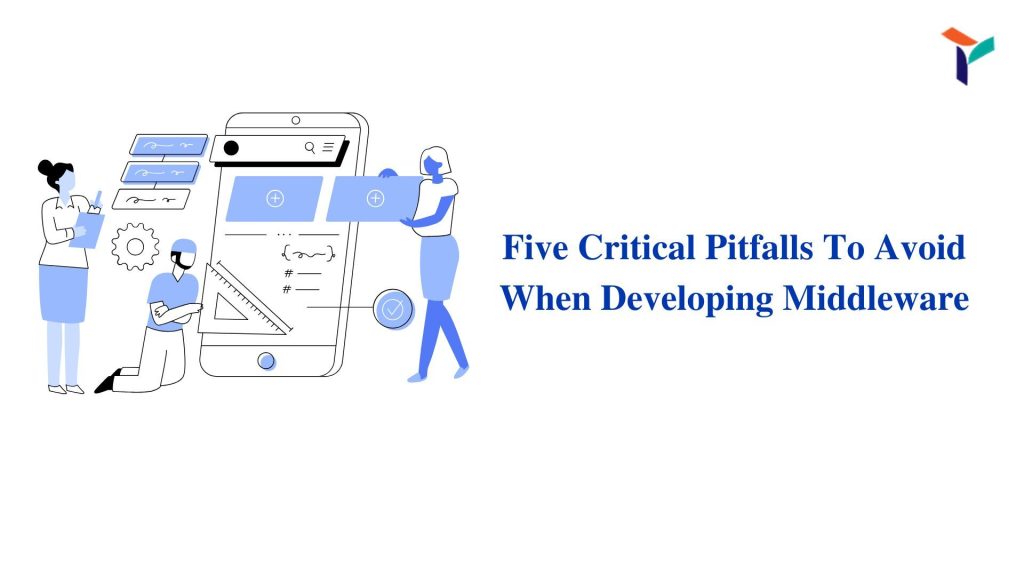
Middleware plays a crucial role in modern applications, ensuring seamless communication between various systems, databases, and services. However, developing and integrating middleware is not without challenges. Many teams encounter avoidable mistakes that lead to performance issues, security vulnerabilities, and system failures.
To help you navigate middleware development successfully, here are the most common pitfalls to avoid and best practices to follow.
1. Overcomplicating Middleware Architecture
One of the most frequent mistakes in middleware development is building an overly complex architecture. Middleware should simplify integration, not introduce additional layers of difficulty.
Common Issues:
- Adding too many redundant services and APIs
- Overusing enterprise service buses (ESBs) where simpler API gateways would suffice
- Lack of modularity, making future updates difficult
Solution:
- Design middleware with scalability and simplicity in mind.
- Use microservices-based middleware to avoid a monolithic architecture.
- Adopt industry-standard integration patterns and tools.
2. Neglecting Security Measures
Middleware often handles sensitive data, making it a prime target for cyber threats. Failing to implement proper security protocols can expose your entire system to vulnerabilities.
Common Issues:
- Lack of encryption in data transmission
- Poor authentication and authorization mechanisms
- Ignoring security patch updates
Solution:
- Implement TLS encryption for all data transfers.
- Use OAuth, JWT, or API keys for secure authentication.
- Regularly update middleware components to fix known vulnerabilities.
3. Ignoring Performance and Scalability
Middleware performance directly impacts the responsiveness of your applications. Poorly optimized middleware can cause delays, bottlenecks, and even complete system failures.
Common Issues:
- High latency due to inefficient request handling
- Lack of caching mechanisms
- Middleware unable to handle growing workloads
Solution:
- Use load balancing and caching strategies like Redis or Memcached.
- Optimize APIs with asynchronous processing to prevent blocking requests.
- Monitor middleware performance using tools like Prometheus or ELK Stack.
4. Poor Error Handling and Logging
Without proper error handling, debugging middleware issues becomes a nightmare, leading to prolonged downtimes and frustrated users.
Common Issues:
- Generic error messages with no context
- Lack of centralized logging and monitoring
- Inconsistent exception handling across services
Solution:
- Implement structured logging with tools like Logstash or Graylog.
- Use a centralized error-tracking system such as Sentry.
- Provide detailed error messages and logs to aid debugging.
5. Failing to Ensure Compatibility Across Systems
Middleware often serves as a bridge between multiple platforms, databases, and protocols. Failing to ensure compatibility can lead to integration failures.
Common Issues:
- Using incompatible data formats (e.g., JSON vs. XML)
- Poor API versioning practices
- Ignoring backward compatibility when updating middleware
Solution:
- Standardize data formats using JSON, XML, or Protocol Buffers.
- Implement API versioning strategies to prevent breaking changes.
- Use middleware testing frameworks to validate integrations before deployment.
6. Not Planning for Future Growth
Middleware must be designed with future expansion in mind. Many teams build middleware tailored only to current needs, making scaling difficult later.
Common Issues:
- Hardcoding configurations instead of using environment variables
- Middleware unable to handle increased transaction volumes
- Ignoring cloud-native deployment options
Solution:
- Use containerized middleware with Docker and Kubernetes.
- Design middleware with horizontal scaling capabilities.
- Implement configurable parameters instead of hardcoding values.
Conclusion
Middleware development and integration require careful planning and execution to avoid security risks, performance bottlenecks, and compatibility issues. By following best practices—such as optimizing for scalability, enforcing security measures, and ensuring proper error handling—you can create a robust, future-proof middleware solution.
At TRIOTECH SYSTEMS, we specialize in middleware solutions that ensure seamless integration, security, and scalability for businesses of all sizes.
Need middleware development expertise? Contact Us Today!
Keep reading

Managed DevOps Cloud Security Company: Best Practices & Benefits for Healthcare
In today’s rapidly evolving healthcare landscape, organizations face intense pressure to deliver secure, compliant, and innovative digital solutions while safeguarding sensitive patient data. A specialized managed…
Read article
The Top-Performing DevOps Tools in 2025
If you're looking to modernize your development workflow, the tools you use are no longer optional. The best DevOps teams in 2025 are defined not just…
Read article
How to Reduce Downtime During Software Updates
If your team loses sleep every time a software update goes live, the real issue isn’t the update — it’s the way it’s being deployed. To…
Read articleBuilding on AI or the cloud?
Get a security architect's review of your cloud, CI/CD and AI agent permissions. Free.