AI Agents
& QA Automation Testing

Built so a green test suite actually means the software works.
Triotech Systems turns software testing into production-grade automation and intelligence, from custom AI agents and specialized RAG framework development to predictive testing pipelines, turning advanced validation into an asset your business can measure, not a coverage report nobody outside the QA team ever reads.


AI Agents
& QA Automation Testing

Built so a green test suite actually means the software works.
Triotech Systems turns software testing into production-grade automation and intelligence, from custom AI agents and specialized RAG framework development to predictive testing pipelines, turning advanced validation into an asset your business can measure, not a coverage report nobody outside the QA team ever reads.

Coverage

Coverage

Escape Rate

Stability

Unit

Unit

API

UI

Regression

Maps to

Coverage

Escape Rate

Stability

Built into

API

Unit

UI

Regression

Maps to

Coverage

Escape Rate

Stability

Built into

Unit

API

UI

Regression

Unit

Unit

API

UI

Regression

What is AI QA automation testing?

The plain version

Taking the old model, where teams write test cases by hand and maintain scripts that break every time a developer renames a button, and replacing it with agents that generate scenarios, execute them, and adapt automatically when the interface changes. A recent industry report found 56.4% of QA teams are still measured primarily on test coverage and 40.1% on automation coverage, activity metrics, while only 8.6% are evaluated on actual business impact. We built this practice to optimize for the second number.
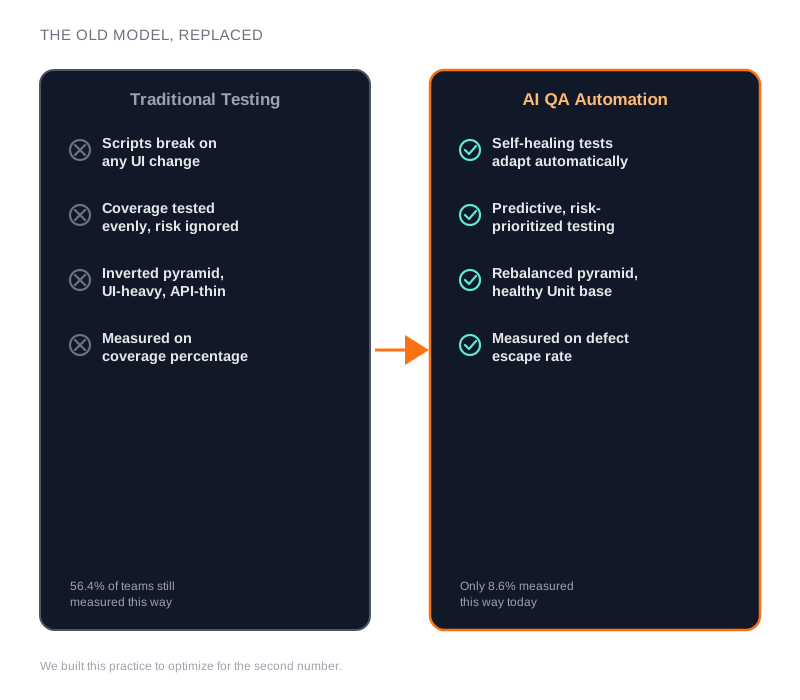
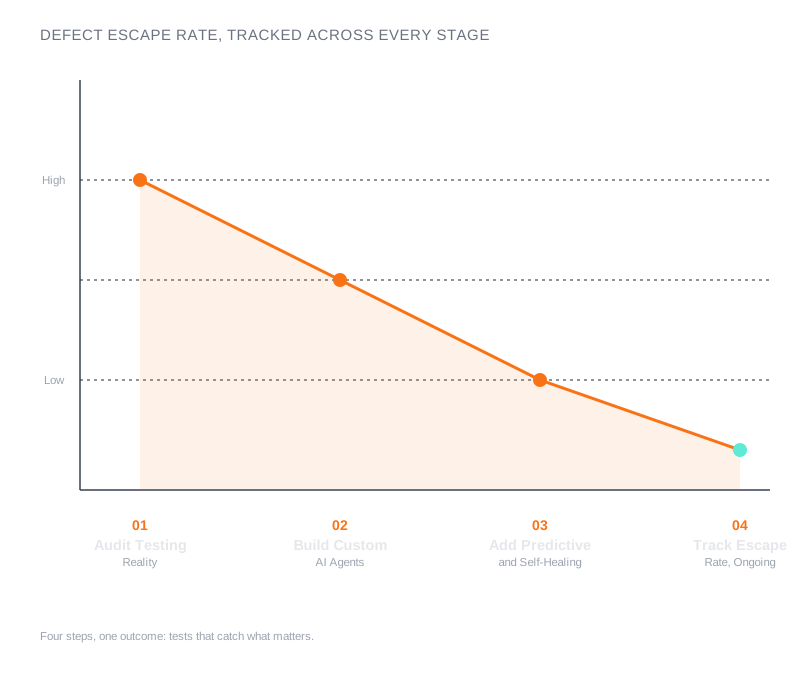
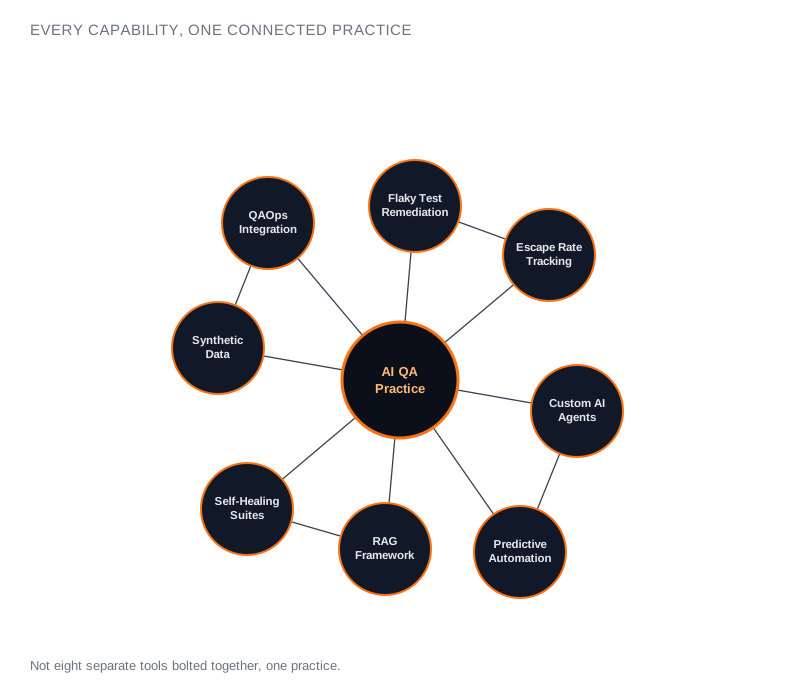
Figure 1: requirements retrieved via RAG, test scenarios generated and executed by AI agents, and risk prioritized by predictive analysis before a single test runs
Security Pipeline Automation

Custom AI Agents & RAG

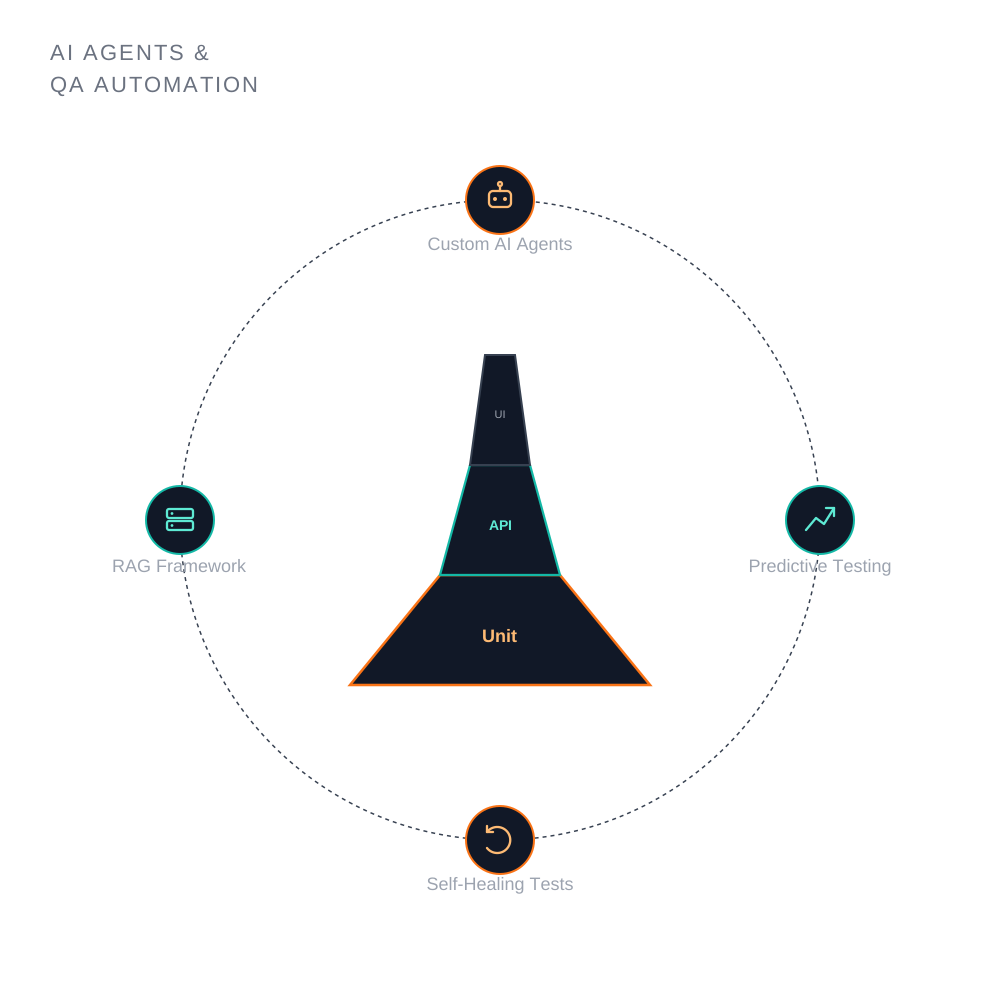
Custom AI agents generate test scenarios using real codebase context and defect history for more accurate validation.
Policy as Code & AI Red-Teaming

Predictive Test Automation

Pipelines that analyze commit patterns and past defects to flag where bugs are statistically likely to hide, so effort goes where the real risk is.
Evidence That Already Exists

Self-Healing Test Suites

Self-adaptive tests validate whether the user can finish the task, so a renamed button or a moved field doesn’t quietly break your suite.

One team, six disciplines

AIOps, Cloud & FinOps, DevSecOps, Data & MLOps, AI Agents & QA, and product engineering.

Certified security leadership

CISSP, CSSLP, and DevSecOps-certified leadership sets the technical bar for every engagement, not just the sales conversation.

Multi-vertical experience

Engagements across finance, healthcare, and other regulated industries, where compliance and uptime requirements are non-negotiable.

Toronto-based since 2020

An engineering studio with a fixed home base and a public track record—not an anonymous offshore contracting pool.

Agile, CI/CD-driven delivery

Solutions shipped through automated development workflows and continuous integration/deployment, so releases stay fast without skipping review.

Four steps, one outcome: tests that catch what matters.

01

Audit Your Current Software Testing Reality

Measure which tests deliver real value, expose weak coverage, and reveal an inverted test pyramid with excessive UI testing and limited API coverage.
02

Build Policy as Code Around Real Requirements

Not a generic template, guardrails that reflect the specific controls your compliance framework actually requires, enforced automatically.
03

Integrate Security Pipeline Automation

SAST, DAST, IAST, and SCA running on every commit, with secret scanning and signed artifacts closing the gaps left between them.
04

Build Continuous Compliance Evidence

Every control, every scan result, every deployment gets logged in a form that’s actually usable in an audit, generated automatically.
TEST SUITE AUDIT → SELF-HEALING, RISK-PRIORITIZED PIPELINE, BUILT IN

ONGOING →

DEFECT ESCAPE RATE, NOT COVERAGE PERCENTAGE, IS THE NUMBER WE OWN

Here's what's actually in scope.

Built on real credentials, not just process.

Since 2020

Running Production Since 2020

Building AI-powered testing practices since 2020, for fintech, healthcare, e-commerce, and crypto clients who can’t afford a defect that reaches production.
One Practice

One Practice, Every Regulated Industry

The same custom-agent, predictive-testing, and evidence-tracking practice shows up whether we’re testing fintech payments, healthcare records, or crypto flows..
Compliance as a Floor

Compliance as a Floor, Not a Ceiling

Hitting a coverage target and actually catching real defects aren’t the same thing, we build toward genuine defect detection first, coverage second.
Outcomes, Not Activity

Measured by Audit Outcomes

Defect escape rate and test stability are the numbers we report, because coverage and automation percentages are easy to inflate without improving quality.
Shared Infrastructure

Built Alongside DevSecOps & MLOps

The AI agents and predictive pipelines we build for testing draw on the same infrastructure discipline we apply everywhere else, not a separate team.
Honest About Real Costs

Evidence Over Buzzwords

Fixing chronically flaky tests and rebuilding an inverted test pyramid is unglamorous, unbillable-sounding work. We do it anyway, because it’s what works.

No flat number. A scoped proposal instead.

How it works

There’s no flat number that would mean much, a team with a reasonably mature test suite that just needs predictive prioritization and self-healing added is a different engagement than one starting from a thin, unreliable test suite with a badly inverted test pyramid. We’ll start with an honest audit of your current testing reality, and come back with a scoped proposal so you know the real cost and timeline before committing. Most engagements combine an initial build phase with ongoing support, since a testing practice that isn’t maintained degrades the same way an untested codebase does.
How it works

There’s no flat number that would mean much, a team with a reasonably mature test suite that just needs predictive prioritization and self-healing added is a different engagement than one starting from a thin, unreliable test suite with a badly inverted test pyramid. We’ll start with an honest audit of your current testing reality, and come back with a scoped proposal so you know the real cost and timeline before committing. Most engagements combine an initial build phase with ongoing support, since a testing practice that isn’t maintained degrades the same way an untested codebase does.

We track the number that predicts whether users hit bugs.

7mo

2020 The year we started building software testing and QA automation practices, alongside our broader DevSecOps and MLOps work.

4

Regulated and high-stakes industries we build for: fintech, healthcare, e-commerce, and crypto, where a missed defect is a real cost.

100%

The metric we build the whole practice around, because it’s harder to inflate than coverage and it’s what actually predicts user-facing bugs.

What Our Clients Are Saying

Discover the experiences and feedback from Our Valued Clients.

Learn how We can help your industry

Schedule a meeting with us to find out how TRIOTECH SYSTEMS can help your industry.

favicon

Connect with Us

Fill in your details below and we'll get back to you!

Thank You

We have received your inquiry and will get back to you soon

Frequently Asked Questions

Everything you need to know about working with TRIOTECH SYSTEMS.

AI QA automation vs traditional test automation, what's actually different?

Traditional test automation runs scripted steps and breaks the moment the interface changes. AI QA automation generates and adapts tests using machine learning, validates against objectives rather than exact steps, and increasingly prioritizes what to test based on predicted risk rather than testing everything equally.

Tests that adjust automatically when the application changes in minor ways, a button gets renamed, an element moves, instead of failing and requiring a human to manually update the script. Self-adaptive tests go further, validating whether the user can actually complete a task rather than checking for one specific element.

It analyzes patterns across code commits, historical test results, and past production incidents to identify which parts of a codebase are statistically most likely to contain the next bug, so testing effort concentrates on genuinely high-risk areas instead of spreading evenly across low-risk code too.

Artificially generated data that mimics the statistical properties of real production data without containing any actual customer information, letting teams in regulated industries test realistic scenarios, including rare edge cases, without the compliance risk of using real customer records.

Update cookies preferences