24/7 IT
Infrastructure Monitoring

Built so a problem gets caught before your customers do, not after.
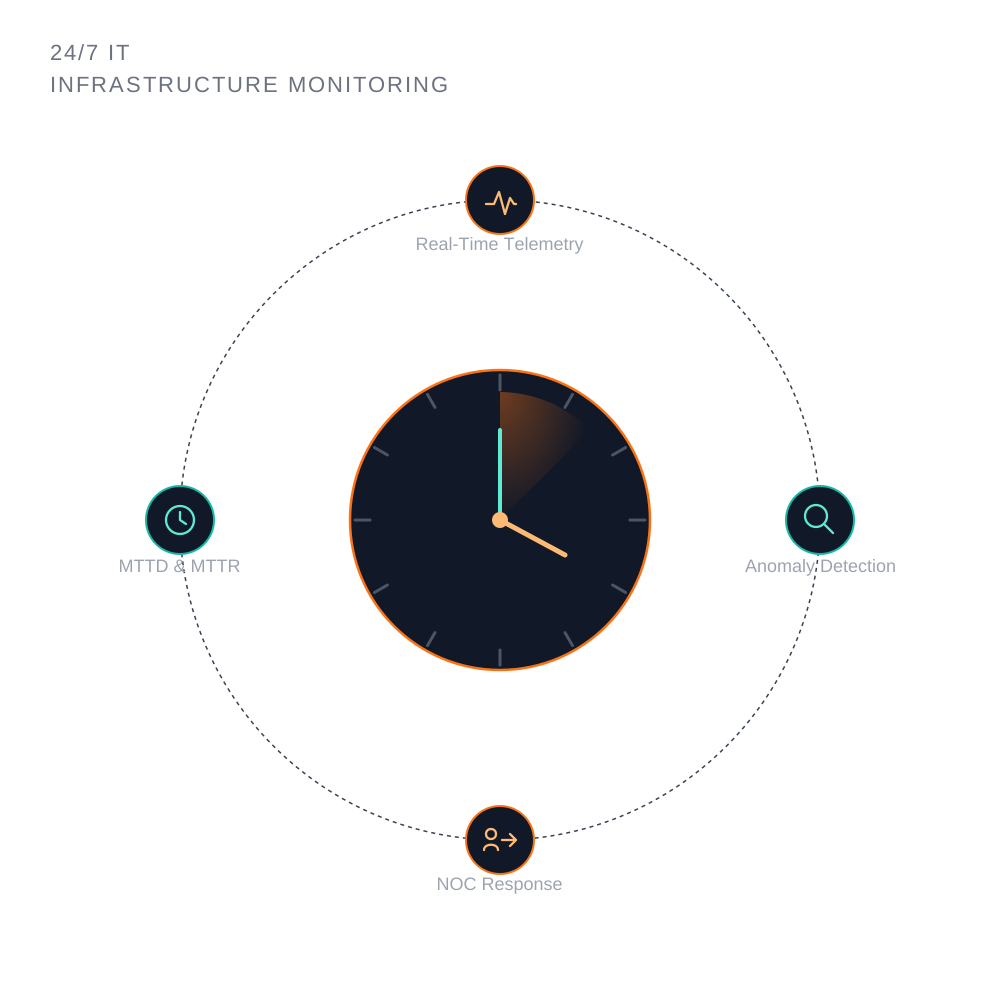
Triotech Systems replaces the on-call phone that might get answered with AI-augmented 24/7 monitoring and a dedicated NOC, from real-time telemetry and anomaly detection to automated alerting and escalation runbooks, treating mean time to detect as a number you can measure and improve, not an uptime percentage on a sales slide.


24/7 IT
Infrastructure Monitoring

Built so a problem gets caught before your customers do, not after.
Triotech Systems replaces the on-call phone that might get answered with AI-augmented 24/7 monitoring and a dedicated NOC, from real-time telemetry and anomaly detection to automated alerting and escalation runbooks, treating mean time to detect as a number you can measure and improve, not an uptime percentage on a sales slide.

MTTD

MTTD

MTTR

Uptime SLA

Servers

Servers

Networks

Applications

Databases

Maps to

MTTD

MTTR

Uptime SLA

Built into

Networks

Servers

Applications

Databases

Maps to

MTTD

MTTR

Uptime SLA

Built into

Servers

Networks

Applications

Databases

Servers

Servers

Networks

Applications

Databases

What is 24/7 IT infrastructure monitoring?

The plain version

Continuous, real-time observation of your systems, servers, networks, applications, and databases, with automated detection and human response available around the clock, not just an on-call phone during business hours. Real-time telemetry feeds into an observability stack that establishes what “normal” looks like for your specific systems, while anomaly detection, increasingly AI-assisted, flags genuine deviations from that baseline and filters out the false positives that make teams start ignoring alerts. The two numbers that actually measure whether any of this works are mean time to detect (MTTD) and mean time to respond (MTTR); everything else, including the uptime percentage on a sales slide, is secondary to those two.
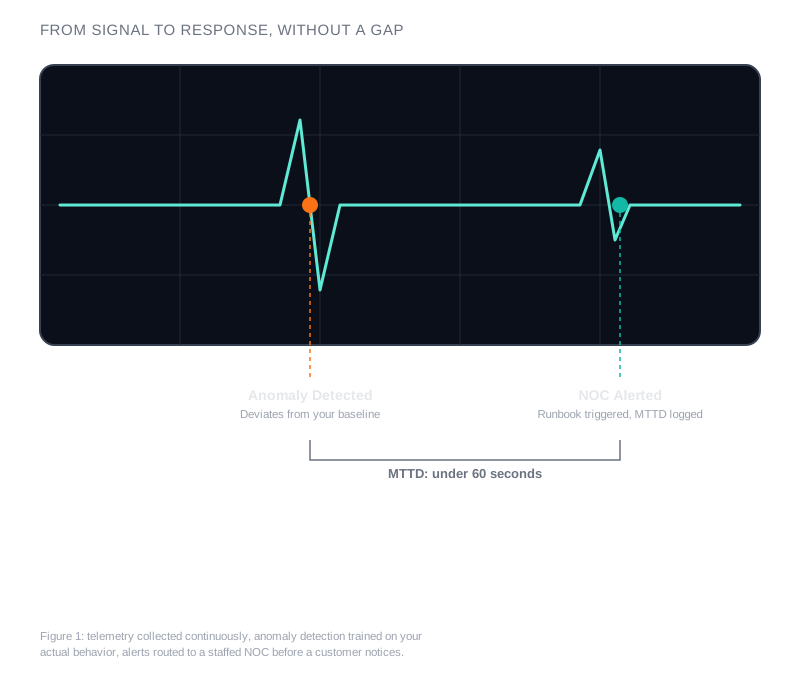
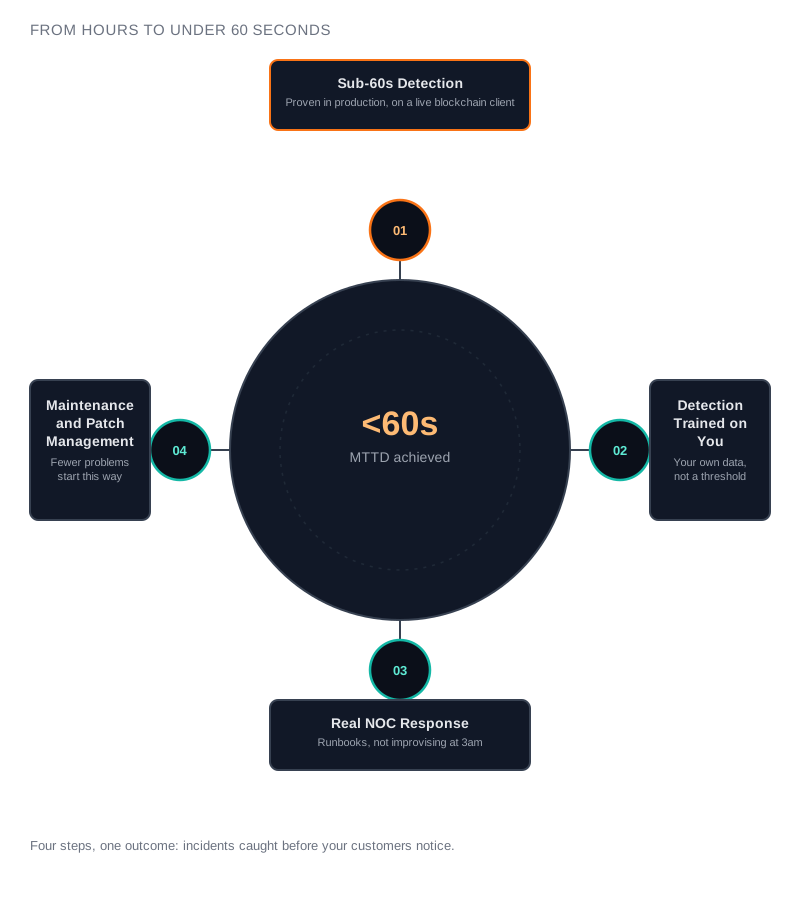
Figure 1: telemetry collected continuously across your infrastructure, anomaly detection trained on your actual system behavior, and alerts routed to a staffed NOC before a customer ever notices.
Unified Visibility

Real-Time Observability Telemetry Built On Your Actual Systems

Continuous telemetry across servers, applications, networks, and databases, feeding one unified view instead of five disconnected dashboards.
Smarter Detection

AI-Trained Detection Anomaly Detection Tuned to You, Not a Generic Threshold

Anomaly detection trained on your own historical data, built to catch real incidents while cutting the false positives that cause alert fatigue.
Operational Response

Human Response A Real NOC, Not Just an On-Call Phone

Predefined runbooks for immediate remediation and a structured escalation framework, so response doesn’t depend on someone improvising at 3am.

One team, six disciplines

AIOps, Cloud & FinOps, DevSecOps, Data & MLOps, AI Agents & QA, and product engineering.

Certified security leadership

CISSP, CSSLP, and DevSecOps-certified leadership sets the technical bar for every engagement, not just the sales conversation.

Multi-vertical experience

Engagements across finance, healthcare, and other regulated industries, where compliance and uptime requirements are non-negotiable.

Toronto-based since 2020

An engineering studio with a fixed home base and a public track record—not an anonymous offshore contracting pool.

Agile, CI/CD-driven delivery

Solutions shipped through automated development workflows and continuous integration/deployment, so releases stay fast without skipping review.

Four steps, one outcome: code you can actually trust.

01

Sub-60-second detection, for a real client

For a live multi-chain blockchain operator, mean time to detect went from hours to under 60 seconds, and it wasn’t a demo, it was production.
02

Anomaly detection trained on your own data

The detection engine is trained on your actual historical behavior, so it distinguishes real incidents from normal noise, not a generic threshold.
03

A real NOC, not a shared help desk queue

Predefined runbooks for immediate remediation and a structured escalation framework, the difference between “eventually” and “next five minutes.
04

Track Acceptance Rate, Manage Debt Honestly

Helpdesk, infrastructure maintenance, upgrades, and patch management alongside the monitoring, because fewer problems start if systems stay current.
INFRASTRUCTURE AUDIT → AI-TRAINED, NOC-BACKED MONITORING PIPELINE, BUILT IN

ONGOING →

MTTD AND MTTR, NOT UPTIME PERCENTAGE, ARE THE NUMBERS WE OWN

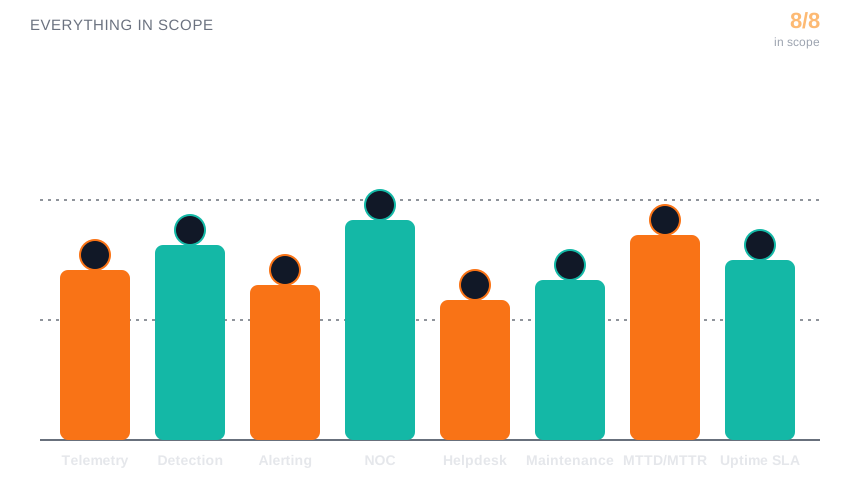
Here's what's actually in scope.

Built on real credentials, not just process.

Since 2020

Since 2020 Building Software

Managed technical support and infrastructure monitoring since 2020, well before “AI-assisted” became every monitoring vendor’s tagline.
Real Metrics

MTTD & MTTR Over Uptime

The metrics that actually reflect whether monitoring works get tracked and reviewed honestly, not a 99.9% figure nobody can verify.
Verified Results

A Result You Can Actually Interrogate

For a live blockchain operator, MTTD dropped from hours to under 60 seconds and MTTR improved by more than 80%, a specific, named case.
Full-Stack

Monitoring & Maintenance

Helpdesk, upgrades, and patch management sit alongside the monitoring itself, since a lot of what monitoring catches is preventable..
Multi-Vertical Experience

Built for Fintech, Healthcare & Crypto

A Toronto-based team running monitoring and technical support since 2020, for clients where an undetected incident has real consequences.
Honest About Coverage

We Tell You What You Actually Need

If a better-configured help desk solves it, we’ll say so, rather than selling the most expensive tier of NOC coverage you don’t need.

No flat number. A scoped proposal instead.

How it works

There’s no single number that would mean much, a small business needing after-hours coverage for a handful of critical systems is a very different engagement than a blockchain operator needing sub-minute detection across validator infrastructure at global scale. We’ll start with an honest look at your current infrastructure and actual risk windows, and come back with a scoped proposal so the real cost is clear before committing. Most engagements are structured as an ongoing managed IT support retainer, since monitoring that isn’t continuously maintained degrades in effectiveness the same way any other system does.
How it works

There’s no single number that would mean much, a small business needing after-hours coverage for a handful of critical systems is a very different engagement than a blockchain operator needing sub-minute detection across validator infrastructure at global scale. We’ll start with an honest look at your current infrastructure and actual risk windows, and come back with a scoped proposal so the real cost is clear before committing. Most engagements are structured as an ongoing managed IT support retainer, since monitoring that isn’t continuously maintained degrades in effectiveness the same way any other system does.

We track the numbers that predict whether anyone notices before your customers do.

2020

2The year we started running technical support and infrastructure monitoring, for fintech, healthcare, e-commerce, and crypto clients.

4

Industries we monitor mission-critical systems for: fintech, healthcare, e-commerce, and crypto, where an undetected incident has real consequences.

Under 60 Sec

The mean time to detect we took a live blockchain client’s infrastructure to, down from hours, through AI-trained anomaly detection and a staffed NOC..

What Our Clients Are Saying

Discover the experiences and feedback from Our Valued Clients.

Learn how We can help your industry

Schedule a meeting with us to find out how TRIOTECH SYSTEMS can help your industry.

favicon

Connect with Us

Fill in your details below and we'll get back to you!

Thank You

We have received your inquiry and will get back to you soon

Frequently Asked Questions

Everything you need to know about working with TRIOTECH SYSTEMS.

24/7 IT monitoring vs. business hours support, how different is it really?

Significantly. Business hours support means incidents outside the workday sit until someone’s back online, which is exactly when systems tend to fail, since off-hours changes and low-traffic issues often go unnoticed longest. True 24/7 monitoring means detection and initial response happen regardless of the hour.

It depends heavily on infrastructure complexity and how critical continuous uptime is to your business, a small business with a handful of key systems costs less to cover than a live financial or blockchain platform needing sub-minute detection at scale. We’ll give a real number after understanding your actual environment.

A help desk typically responds to tickets people submit, reactive and human-initiated. A NOC continuously monitors infrastructure directly and detects problems before anyone submits a ticket, often before a human even notices. Most organizations need both, but they solve different problems.

Real-time telemetry across your actual infrastructure, anomaly detection trained on your specific systems’ normal behavior rather than generic thresholds, and automated alerting that reaches a human immediately instead of sitting in a queue. Our blockchain client’s result, hours down to under 60 seconds, came from exactly that combination.

Update cookies preferences