Crypto exchange.
Infrastructure security

Built to hold up through the incident nobody planned for.
Triotech Systems designs, secures, and operates infrastructure for crypto exchanges, custodians, and blockchain platforms handling live customer funds the uptime engineering, key management, and continuous security auditing that keep a platform online and solvent through volatility spikes, coordinated attacks, and everything in between.`


Crypto exchange.
Infrastructure security

Built to hold up through the incident nobody planned for.
Triotech Systems designs, secures, and operates infrastructure for crypto exchanges, custodians, and blockchain platforms handling live customer funds the uptime engineering, key management, and continuous security auditing that keep a platform online and solvent through volatility spikes, coordinated attacks, and everything in between.`

AWS

AWS

Azure

GCP

MPC Wallets

MPC Wallets

Multi-Sig

Cold Storage

Bridge Security

Deployed on

AWS

Azure

GCP

Crypto-native controls

Multi-Sig

MPC Wallets

Cold Storage

Bridge Security

Deployed on

AWS

Azure

GCP

Crypto-native controls

MPC Wallets

Multi-Sig

Cold Storage

Bridge Security

MPC Wallets

MPC Wallets

Multi-Sig

Cold Storage

Bridge Security

What is crypto infrastructure security?

The extractable answer

The combined discipline of securing the systems that hold, move, and process digital assets — wallet architecture, exchange matching engines, blockchain node infrastructure, and the DevOps pipelines that deploy changes to all of it — against both traditional infrastructure risk and crypto-specific attack vectors.
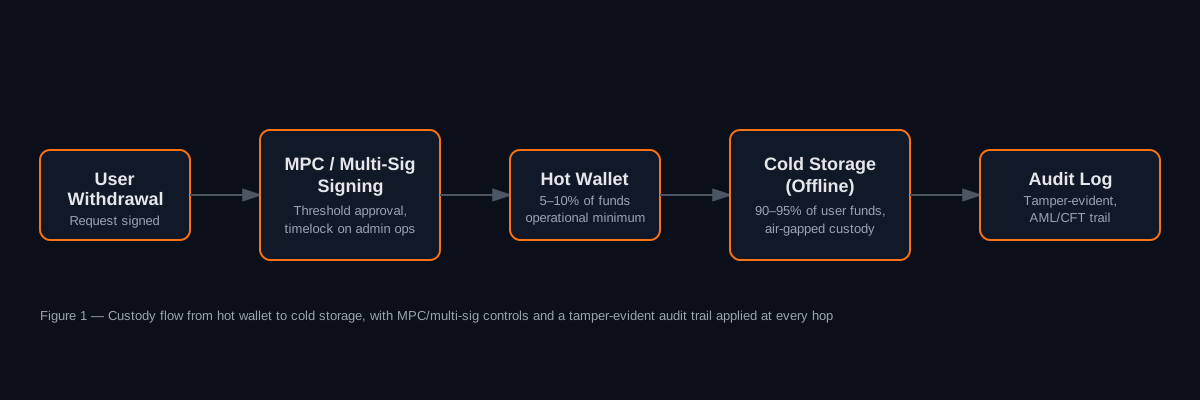
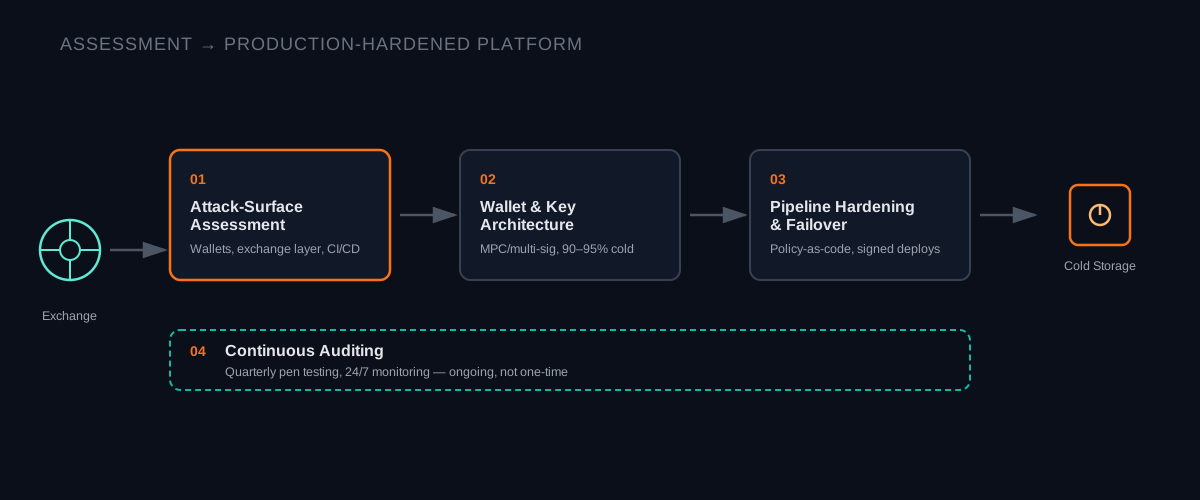
Figure 1, funds flow from user withdrawal through MPC/multi-sig signing to cold storage, with an audit trail at every hop
The platform provides

Multi-cloud compute

AWS, Azure, GCP, or bare-metal node infrastructure. The systems that run the platform foundation only.
Triotech owns

Custody & control architecture

Wallet design, key management, DevOps pipeline hardening, and uptime engineering built around crypto’s actual attack surface.
The result

A solvent, trusted platform

Infrastructure that stays online, solvent, and trusted a year from now not just through the next scheduled audit.

One team, six disciplines

AIOps, Cloud & FinOps, DevSecOps, Data & MLOps, AI Agents & QA, and product engineering.

Certified security leadership

CISSP, CSSLP, and DevSecOps-certified leadership sets the technical bar for every engagement, not just the sales conversation.

Multi-vertical experience

Engagements across finance, healthcare, and other regulated industries, where compliance and uptime requirements are non-negotiable.

Toronto-based since 2020

An engineering studio with a fixed home base and a public track record—not an anonymous offshore contracting pool.

Agile, CI/CD-driven delivery

Solutions shipped through automated development workflows and continuous integration/deployment, so releases stay fast without skipping review.

Four stages, built around crypto-specific attack patterns.

01

Infrastructure & attack-surface assessment

We map wallets, exchange layer, node infrastructure, and CI/CD against known exchange hacks, bridge exploits, and smart contract vulnerabilities.
02

Wallet & key management architecture

MPC or multi-signature design, with cold storage holding 90–95% of funds offline and timelock controls on admin-level key operations.
03

Blockchain DevOps pipeline hardening

Policy-as-code, secret scanning, signed commits and artifacts, and supply-chain attestation on every smart contract or matching-engine deployment.
04

Uptime engineering & continuous auditing

Multi-region failover, quarterly penetration testing, and 24/7 monitoring, with incident response contained in minutes, not hours.
ASSESSMENT → PRODUCTION-HARDENED PLATFORM

ONGOING →

FIXED IMPLEMENTATION + MONTHLY RETAINER

Every crypto infrastructure security engagement covers:

Built for 2026's threat environment, not a general security posture.

Multi-cloud

Not locked to one platform

AWS, Azure, GCP, or hybrid with dedicated bare-metal for node infrastructure controls stay consistent across all of it.
Since 2020

Production infrastructure since 2020

Running production infrastructure for crypto clients since 2020, alongside our fintech and healthcare compliance practice.
Timeline

Audit-ready on schedule

A median of seven months to SOC 2 Type II readiness starting from zero the same discipline applies to HIPAA too.
Beyond the checklist

Continuous, not annual

Quarterly penetration testing, ongoing smart contract review, and AI-assisted scanning replace the annual audit-and-forget model.
Regulated by default

AML/CFT-ready

We build the audit trails and evidence collection that keep you ahead of tightening AML/CFT and VASP frameworks globally.
Partner model

Engineers who stay past launch

We’re engineers who get called in to actually run and secure the infrastructure not consultants who hand over a report and leave.

Scoped per engagement. No hourly guesswork.

How it works

The right architecture for an early-stage DeFi protocol looks nothing like the right architecture for a licensed exchange processing daily withdrawals at scale. After a discovery call covering your current wallet architecture, transaction volume, and regulatory footprint, we provide a fixed-scope proposal covering assessment, implementation, and ongoing security operations full cost visibility before any work starts.
How it works

The right architecture for an early-stage DeFi protocol looks nothing like the right architecture for a licensed exchange processing daily withdrawals at scale. After a discovery call covering your current wallet architecture, transaction volume, and regulatory footprint, we provide a fixed-scope proposal covering assessment, implementation, and ongoing security operations full cost visibility before any work starts.

Numbers matter more than promises here.

7mo

Median time to SOC 2 Type II readiness, starting from zero.

0

Critical findings across the last 11 external penetration tests of platforms we operate.

$625M

Lost across 30 exploits in April 2026 alone the worst single month in crypto’s history.

What Our Clients Are Saying

Discover the experiences and feedback from Our Valued Clients.

Learn how We can help your industry

Schedule a meeting with us to find out how TRIOTECH SYSTEMS can help your industry.

favicon

Connect with Us

Fill in your details below and we'll get back to you!

Thank You

We have received your inquiry and will get back to you soon

Frequently Asked Questions

Everything you need to know about working with TRIOTECH SYSTEMS.

What makes crypto infrastructure security different from standard cybersecurity?

Crypto platforms combine traditional infrastructure risk with attack vectors that don’t exist elsewhere  private key compromise, smart contract exploits, and cross-chain bridge attacks where a successful breach is often immediate, public, and irreversible, with no chargeback mechanism available afterward.

Quarterly at minimum for an active exchange or custody platform, with continuous automated scanning between formal audits. A single pre-launch audit isn’t sufficient — 2026’s attack data shows exploits accelerating rather than slowing.

Mature exchanges typically hold 90–95% of user funds in cold, offline storage, with only the operational minimum in hot wallets needed for active withdrawal processing.

Yes, though the specific controls differ — centralized exchanges need custody and uptime engineering as the priority, while DeFi protocols need smart contract audit rigor and bridge security as the priority.

Update cookies preferences