Fintech DevOps
Compliance Partner

Built so compliance becomes part of your infrastructure—not an audit scramble six months later.
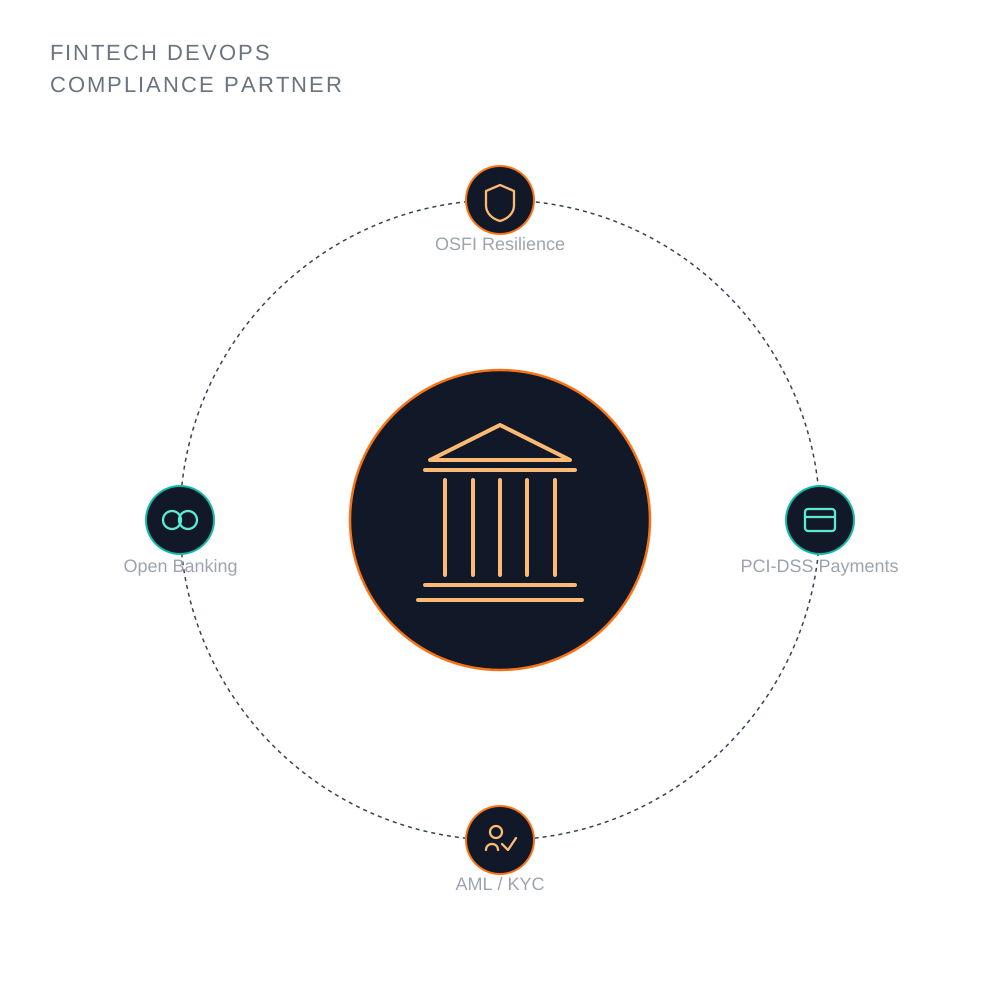
Triotech Systems helps fintech companies build compliance directly into their engineering workflows, combining DevSecOps automation with PCI-DSS, AML/KYC, OSFI, open banking, and continuous compliance monitoring. Instead of treating regulation as paperwork after development, we design infrastructure where evidence, security, and operational resilience become measurable parts of the delivery pipeline from day one.


Fintech DevOps
Compliance Partner

Built so compliance becomes part of your infrastructure—not an audit scramble six months later.
Triotech Systems helps fintech companies build compliance directly into their engineering workflows, combining DevSecOps automation with PCI-DSS, AML/KYC, OSFI, open banking, and continuous compliance monitoring. Instead of treating regulation as paperwork after development, we design infrastructure where evidence, security, and operational resilience become measurable parts of the delivery pipeline from day one.

Operational Resilience

Operational Resilience

Continuous Compliance

Audit Readiness

Cloud

Cloud

Payments

APIs

DevOps

Maps to

Operational Resilience

Continuous Compliance

Audit Readiness

Built into

Payments

Cloud

APIs

DevOps

Maps to

Operational Resilience

Continuous Compliance

Audit Readiness

Built into

Cloud

Payments

APIs

DevOps

Cloud

Cloud

Payments

APIs

DevOps

What is a fintech DevOps compliance partner?

The plain version

A fintech DevOps compliance partner combines security automation, compliance engineering, and cloud infrastructure specifically for financial technology companies. Instead of applying generic DevSecOps practices, the infrastructure is designed around the regulations fintech businesses actually answer to, including OSFI operational resilience, PCI-DSS, AML/KYC, third-party risk management, SOC 2, and Canada’s evolving open banking framework. Continuous evidence collection, policy-as-code, and automated security controls make compliance an ongoing engineering process rather than a project completed before an audit.
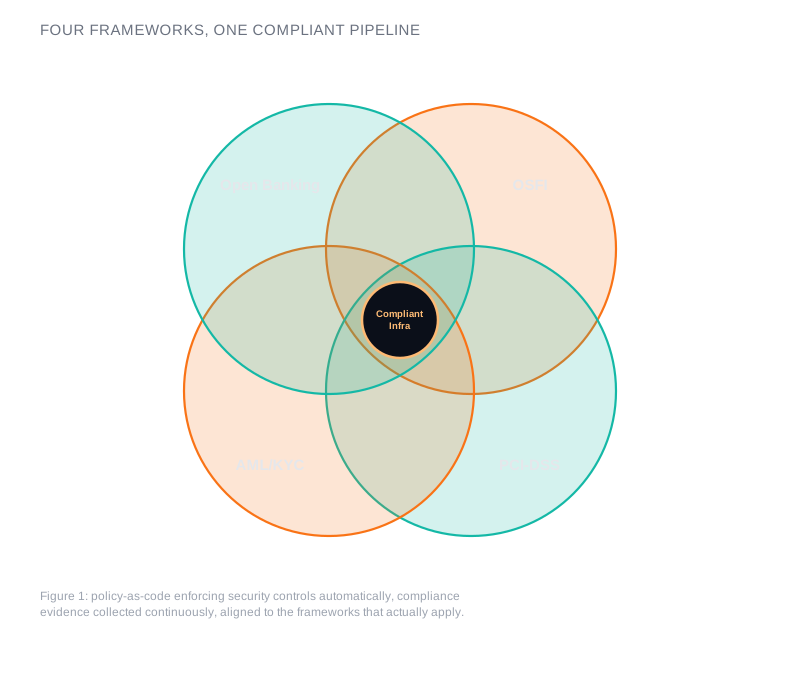
policy-as-code enforcing security controls automatically, compliance evidence collected continuously, and infrastructure aligned with the regulatory frameworks financial institutions actually answer to.
Regulatory Architecture

Compliance Built Around Financial Regulations

Infrastructure designed for PCI-DSS, OSFI, AML/KYC, SOC 2, and open banking requirements from the beginning instead of retrofitting controls after development.
Continuous Compliance

Evidence Collection That Never Stops

Policy-as-code and automated compliance monitoring continuously collect the evidence auditors expect instead of scrambling for documentation before assessments.
Secure Delivery

Embedded Into Every Release

Security testing, compliance validation, and infrastructure controls become part of every deployment pipeline, reducing operational risk without slowing delivery.

One team, six disciplines

AIOps, Cloud & FinOps, DevSecOps, Data & MLOps, AI Agents & QA, and product engineering.

Certified security leadership

CISSP, CSSLP, and DevSecOps-certified leadership sets the technical bar for every engagement, not just the sales conversation.

Multi-vertical experience

Engagements across finance, healthcare, and other regulated industries, where compliance and uptime requirements are non-negotiable.

Toronto-based since 2020

An engineering studio with a fixed home base and a public track record—not an anonymous offshore contracting pool.

Agile, CI/CD-driven delivery

Solutions shipped through automated development workflows and continuous integration/deployment, so releases stay fast without skipping review.

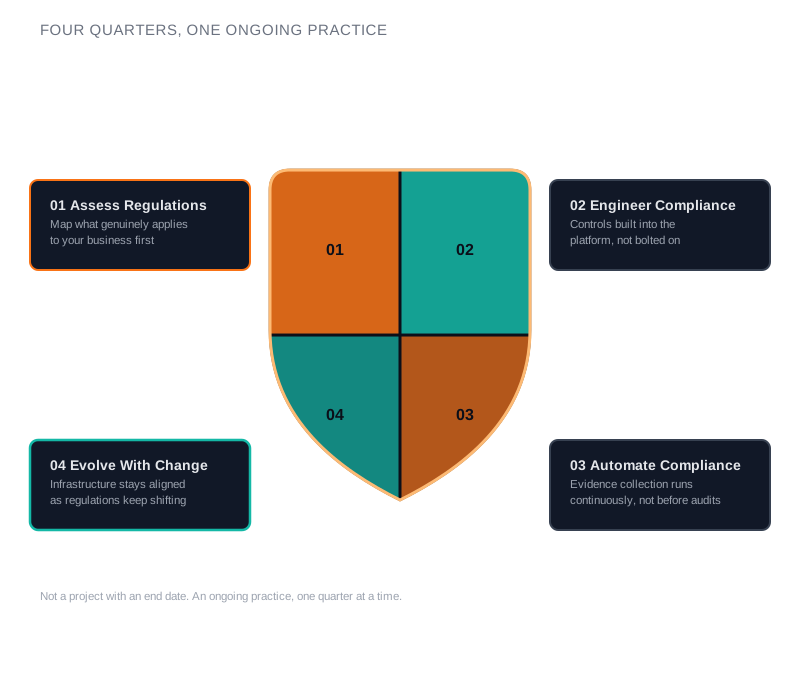
Four steps, one outcome: infrastructure your regulators and customers can trust.

01

Assess Regulations

Every engagement starts by mapping the regulations that genuinely apply to your business, ensuring architecture follows OSFI, PCI-DSS, AML/KYC, and open banking requirements from day one.
02

Engineer Compliance

Security controls, policy-as-code, payment security, encryption, and operational resilience become part of the platform architecture instead of post-launch remediation.
03

Automate Continuous Compliance

Evidence collection, security validation, and audit monitoring run continuously across the delivery pipeline, replacing manual preparation before every assessment.
04

Evolve With Regulatory Change

Infrastructure, compliance controls, and supporting documentation stay aligned as OSFI guidance, payment standards, and open banking requirements continue evolving.
REGULATORY REVIEW → COMPLIANCE-FIRST, POLICY-AS-CODE PIPELINE, BUILT IN

ONGOING →

CONTINUOUS COMPLIANCE, NOT LAST-MINUTE AUDITS, IS THE STANDARD WE MAINTAIN

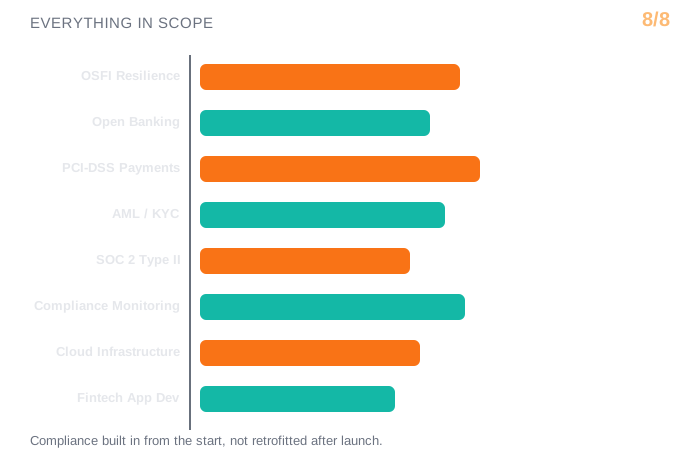
Here's what's actually in scope.

Built on regulatory expertise, not generic security claims.

Since 2020

Compliance-First Since 2020

Compliance-first engineering has shaped how we build financial infrastructure since 2020, long before continuous compliance became an industry marketing trend.
Real Regulations

Built Around Regulations

Every architecture decision aligns with OSFI, PCI-DSS, AML/KYC, and Canada’s open banking framework instead of generic compliance checklists.
Continuous Evidence

Always Audit Ready

Automated evidence collection keeps compliance in a constant state of readiness, eliminating last-minute documentation before regulatory assessments.
Engineering First

Compliance Through Infrastructure

Policy-as-code, encryption, secure pipelines, and operational resilience become part of engineering itself instead of documentation completed after deployment.
Multi-Vertical Experience

Built for Fintech, Healthcare & Crypto

A Toronto-based engineering team delivering regulated infrastructure where compliance, security, and operational resilience directly shape every deployment.
Honest Guidance

Only the Controls You Actually Need

We recommend only the frameworks your business genuinely requires, preferring accurate regulatory scope over unnecessary compliance projects.

No flat number. A scoped proposal instead.

How it works

A fintech startup implementing PCI-DSS for payments has very different requirements from a federally regulated institution building operational resilience, third-party risk controls, and open banking infrastructure together. We begin by assessing your actual regulatory obligations before preparing a scoped proposal with clear costs, priorities, and timelines. Most engagements continue through ongoing compliance monitoring because financial regulations, security expectations, and audit requirements continue evolving after implementation.
How it works

A fintech startup implementing PCI-DSS for payments has very different requirements from a federally regulated institution building operational resilience, third-party risk controls, and open banking infrastructure together. We begin by assessing your actual regulatory obligations before preparing a scoped proposal with clear costs, priorities, and timelines. Most engagements continue through ongoing compliance monitoring because financial regulations, security expectations, and audit requirements continue evolving after implementation.

We build for the frameworks shaping fintech today, not yesterday's checklists.

2020

The year we started building compliance-first infrastructure for regulated industries, with fintech remaining one of our core engineering practices.

4

Core regulatory and compliance domains we engineer around: OSFI, PCI-DSS, AML/KYC, and Canada’s Consumer-Driven Banking framework..

Audit Ready

The operating model we build around, using policy-as-code, automated evidence collection, and ongoing monitoring instead of last-minute audit preparation..

What Our Clients Are Saying

Discover the experiences and feedback from Our Valued Clients.

Learn how We can help your industry

Schedule a meeting with us to find out how TRIOTECH SYSTEMS can help your industry.

favicon

Connect with Us

Fill in your details below and we'll get back to you!

Thank You

We have received your inquiry and will get back to you soon

Frequently Asked Questions

Everything you need to know about working with TRIOTECH SYSTEMS.

What's the difference between fintech DevOps compliance and generic DevSecOps?

Generic DevSecOps focuses on security automation, scanning, and policy enforcement across software delivery. Fintech DevOps compliance adds the financial regulations your business actually answers to, including PCI-DSS, AML/KYC, OSFI operational resilience, third-party risk, and open banking requirements where applicable.

No. Whether OSFI guidance applies depends on your regulatory exposure and business model. Federally regulated institutions and organizations supporting them may require OSFI compliance, while many startups only need PCI-DSS or other applicable frameworks. We determine what genuinely applies before recommending any compliance work.

We begin by identifying the regulations your business must satisfy, then design cloud infrastructure, security controls, payment architecture, compliance automation, and monitoring around those requirements rather than applying a generic deployment template.

PCI-DSS infrastructure includes secure payment pipelines, encrypted cardholder data, controlled access, network segmentation, continuous logging, vulnerability management, and security controls that satisfy formal payment compliance requirements.

Update cookies preferences