Navigating Unique Benefits of the Cloud in Healthcare
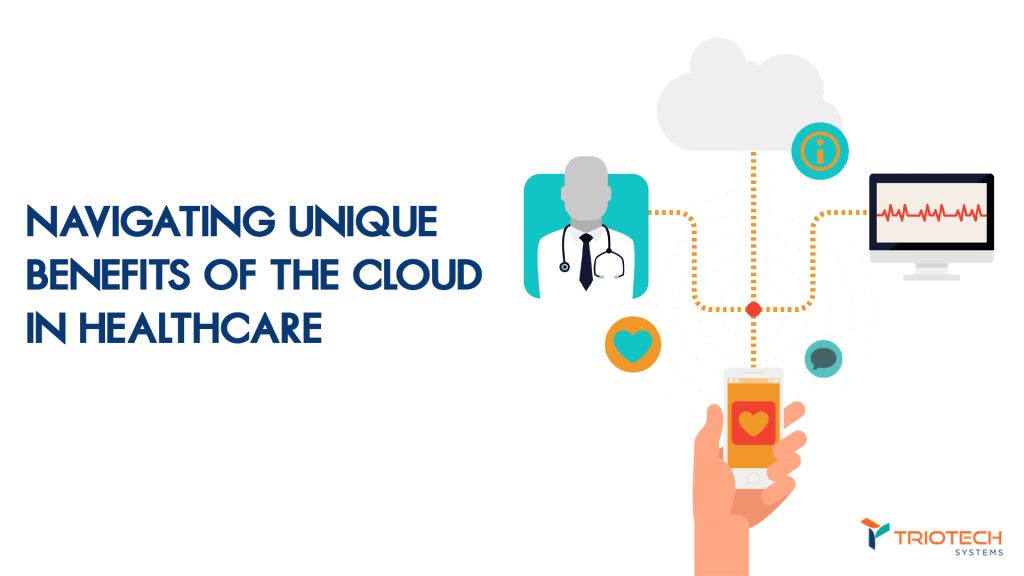
The healthcare industry is transforming digitally, and cloud computing is at the heart of this shift. From securely managing patient records to enabling real-time collaboration among doctors, the cloud redefines how healthcare organizations operate.
But how exactly does the cloud fit into healthcare management?
Let’s explore specific, high-impact cloud benefits for healthcare providers.
1. Secure & Scalable Patient Data Management
Handling vast amounts of electronic health records (EHRs) securely is a major challenge. Traditional on-premise servers are costly and prone to cyber threats. Cloud storage offers a secure, scalable, and cost-efficient alternative.
Key Benefits:
- Data encryption & access control: Keeps sensitive information secure.
- Automatic backups: Reduces data loss risks.
- Scalability: Accommodates growing patient records without hardware investments.
2. Faster & Smarter Diagnosis with AI & Big Data
AI-powered healthcare applications thrive in the cloud, enabling predictive analytics, automated diagnoses, and real-time monitoring.
How the Cloud Enables This:
- Cloud-based AI platforms process large datasets quickly.
- Remote access allows specialists to collaborate globally.
- Edge computing integration ensures real-time health monitoring for patients with chronic diseases.
3. Seamless Telemedicine & Remote Care
Cloud computing has transformed telemedicine, enabling virtual consultations, remote patient monitoring, and mobile health applications.
Example: A rural clinic can use cloud-based video conferencing to connect patients with specialists in urban centers, eliminating the need for long-distance travel.
Key Benefits:
- 24/7 accessibility for doctors and patients.
- Integration with wearables to monitor patient vitals in real time.
- Faster response times in emergencies through cloud-connected systems.
4. Cost Efficiency & IT Optimization
Shifting to the cloud eliminates the need for expensive on-premise servers and maintenance, allowing healthcare providers to allocate resources more efficiently.
Example: A hospital moving its medical applications to cloud-based SaaS platforms can cut IT infrastructure costs while ensuring high availability and uptime.
Why It Matters:
- Reduces hardware dependency and maintenance costs.
- Flexible pay-as-you-go models optimize expenses.
- Streamlined IT operations allow focus on patient care.
5. Compliance & Disaster Recovery
Regulatory compliance and data protection are top priorities in healthcare. Cloud providers offer built-in compliance frameworks and robust disaster recovery solutions.
Key Compliance Benefits:
- Automated updates for evolving regulations.
- Geo-redundant storage protects against data loss.
- Audit trails improve transparency in patient data handling.
Future-Proof Your Healthcare Organization with TRIOTECH SYSTEMS
Navigating cloud adoption in healthcare requires expert guidance and tailored strategies. At TRIOTECH SYSTEMS, we help healthcare providers transition to secure, scalable, and compliant cloud solutions.
Need help choosing the right cloud solution for your healthcare practice?
Contact TRIOTECH SYSTEMS today!
Read More:
Keep reading
Managed DevOps Cloud Security Company: Best Practices & Benefits for Healthcare
In today’s rapidly evolving healthcare landscape, organizations face intense pressure to deliver secure, compliant, and innovative digital solutions while safeguarding sensitive patient data. A specialized managed…
Read article
The Top-Performing DevOps Tools in 2025
If you're looking to modernize your development workflow, the tools you use are no longer optional. The best DevOps teams in 2025 are defined not just…
Read article
How to Reduce Downtime During Software Updates
If your team loses sleep every time a software update goes live, the real issue isn’t the update — it’s the way it’s being deployed. To…
Read articleBuilding on AI or the cloud?
Get a security architect's review of your cloud, CI/CD and AI agent permissions. Free.