Understanding Zero Trust Security in the Cloud Environment

Organizations are increasingly adopting cloud services to optimize operations, however, ignoring the need for robust security frameworks.
This is where the Zero Trust Security model comes in—a transformative approach that ensures no entity, whether inside or outside your network, is trusted by default.
Here is a guide by TRIOTECH SYSTEMS for you to understand what zero trust security is, and why it matters:
What Is Zero Trust Security?
Zero Trust Security, at its core, is built around the principle of “never trust, always verify.” Unlike traditional security models that assume everything within the network is safe, Zero Trust requires constant validation of users, devices, and data access—minimizing vulnerabilities in the cloud environment.
For example, an employee accessing company data from an unmanaged device is treated with the same scrutiny as an external attacker.
This level of meticulous verification prevents unauthorized access and ensures data integrity.
Why Is Zero Trust Vital in Cloud Environments?
Transitioning to the cloud has revolutionized how businesses operate. But it has also opened doors for threats like data breaches, unauthorized access, and insider threats.
Cloud environments host critical resources across multiple locations and users, making traditional perimeter-based security obsolete.
With Zero Trust Architecture (ZTA), businesses can:
- Secure remote workforces without compromising accessibility.
- Reduce the attack surface by segmenting sensitive workloads.
- Comply with strict regulations like GDPR, HIPAA, or CCPA.
Key Principles of Zero Trust Security
To implement a Zero Trust framework, organizations should focus on these foundational principles:
- Identity Verification: Authenticate every user and device attempting to access cloud resources.
- Least Privilege Access: Grant only the minimum access required to perform tasks.
- Micro-Segmentation: Divide the network into smaller segments to isolate sensitive data.
- Continuous Monitoring: Use real-time analytics to detect and mitigate risks.
Imagine a shared folder containing financial data. With Zero Trust, only a select group of verified users would access it, while all other attempts would trigger alerts.
Benefits of Zero Trust in the Cloud
Enhanced data security isn’t the only advantage of Zero Trust. This model also helps organizations:
- Improve operational efficiency through automation and real-time updates.
- Scale securely as businesses expand their cloud environments.
- Gain visibility across multi-cloud systems to detect vulnerabilities faster.
How TRIOTECH SYSTEMS Can Help
At TRIOTECH SYSTEMS, we specialize in providing state-of-the-art cloud services designed to meet your unique security needs.
Whether you’re looking to transition or enhance your existing cloud environment, our team is here to guide you every step of the way.
Contact TRIOTECH SYSTEMS Today & Shift to Secure Cloud Services!
Read Also:
Keep reading
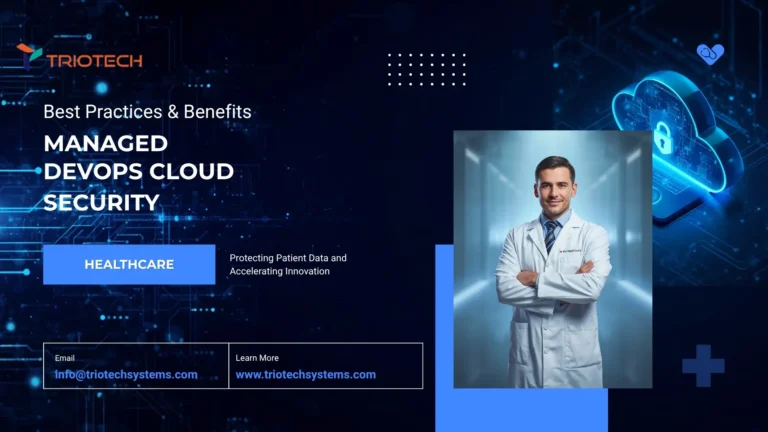
Managed DevOps Cloud Security Company: Best Practices & Benefits for Healthcare
In today’s rapidly evolving healthcare landscape, organizations face intense pressure to deliver secure, compliant, and innovative digital solutions while safeguarding sensitive patient data. A specialized managed…
Read article
The Top-Performing DevOps Tools in 2025
If you're looking to modernize your development workflow, the tools you use are no longer optional. The best DevOps teams in 2025 are defined not just…
Read article
How to Reduce Downtime During Software Updates
If your team loses sleep every time a software update goes live, the real issue isn’t the update — it’s the way it’s being deployed. To…
Read articleBuilding on AI or the cloud?
Get a security architect's review of your cloud, CI/CD and AI agent permissions. Free.