FinOps Cloud
Cost Optimization.

Built so your bill reflects what you’re using, not what you forgot to shut down.
Triotech Systems shifts your cloud infrastructure into highly observable, cost-optimized environments machine learning for predictive capacity forecasting and multi-cloud optimization, built to structurally drop resource waste across every provider you run, not just hand you a dashboard and wish you luck finding the problem yourself.


FinOps Cloud
Cost Optimization.

Built so your bill reflects what you’re using, not what you forgot to shut down.
Triotech Systems shifts your cloud infrastructure into highly observable, cost-optimized environments machine learning for predictive capacity forecasting and multi-cloud optimization, built to structurally drop resource waste across every provider you run, not just hand you a dashboard and wish you luck finding the problem yourself.

AWS

AWS

Azure

GCP

Fintech

Fintech

Healthcare

E-Commerce

Crypto

Unified across

AWS

Azure

GCP

Built for

Healthcare

Fintech

E-Commerce

Crypto

Unified across

AWS

Azure

GCP

Built for

Fintech

Healthcare

E-Commerce

Crypto

Fintech

Fintech

Healthcare

E-Commerce

Crypto

What is FinOps cloud cost optimization?

The plain version

The practice of managing cloud spending as a shared responsibility between engineering, finance, and the business instead of a mystery bill that lands on someone’s desk once a month and gets quietly approved because nobody has time to actually dig into it. You genuinely cannot optimize what you can’t see clearly, broken down by team, by workload, by provider.

Figure 1 — raw billing data unified across providers, forecasted against real usage, and turned into a recoverable-savings number
The platform provides

Unified cost visibility

Unified cost visibility across AWS, Azure, and GCP, broken down by team and workload, instead of three dashboards you’re toggling between.
Triotech owns

Predictive forecasting & GPU right-sizing

Predictive capacity forecasting and GPU right-sizing built on your actual usage patterns, not a guess or last year’s peak that never happened again.
The result

A number you can verify

25–40% reductions in monthly cloud spend for mature FinOps practices a real, verifiable number, not a rounded-up sales estimate.

One team, six disciplines

AIOps, Cloud & FinOps, DevSecOps, Data & MLOps, AI Agents & QA, and product engineering.

Certified security leadership

CISSP, CSSLP, and DevSecOps-certified leadership sets the technical bar for every engagement, not just the sales conversation.

Multi-vertical experience

Engagements across finance, healthcare, and other regulated industries, where compliance and uptime requirements are non-negotiable.

Toronto-based since 2020

An engineering studio with a fixed home base and a public track record—not an anonymous offshore contracting pool.

Agile, CI/CD-driven delivery

Solutions shipped through automated development workflows and continuous integration/deployment, so releases stay fast without skipping review.

Four steps, one number: what your cloud actually wastes.

01

Get Complete Cloud Cost Visibility

Unified cost data across every cloud provider you’re on, broken down by team and workload most teams work from a partial picture without knowing it.
02

Find the Waste That’s Actually There

Idle compute, overprovisioned instances, forgotten resources, and the less obvious stuff data egress fees, GPU capacity sitting mostly idle.
03

Build Predictive Capacity Forecasting

Machine learning models trained on your real usage patterns, so provisioning decisions reflect what you’ll likely need, not a stale peak from a year ago.
04

Implement the High-Leverage Savings Firstone

Reserved instances for stable workloads, rightsizing for overprovisioned resources, scheduling for non-production environments that don’t run 24/7.
BILLING AUDIT → RECOVERABLE-SAVINGS NUMBER

ONGOING →

HIGH-LEVERAGE MOVES FIRST, DEEPER SAVINGS AS THE PRACTICE MATURES

Here's what's actually in scope.

Built from running the infrastructure itself.

Since 2020

Running Production Since 2020

Running cloud infrastructure for fintech, healthcare, e-commerce, and crypto clients since 2020 cost optimization was never bolted on.
Honest About the Numbers

We're Honest About the Five-Year High

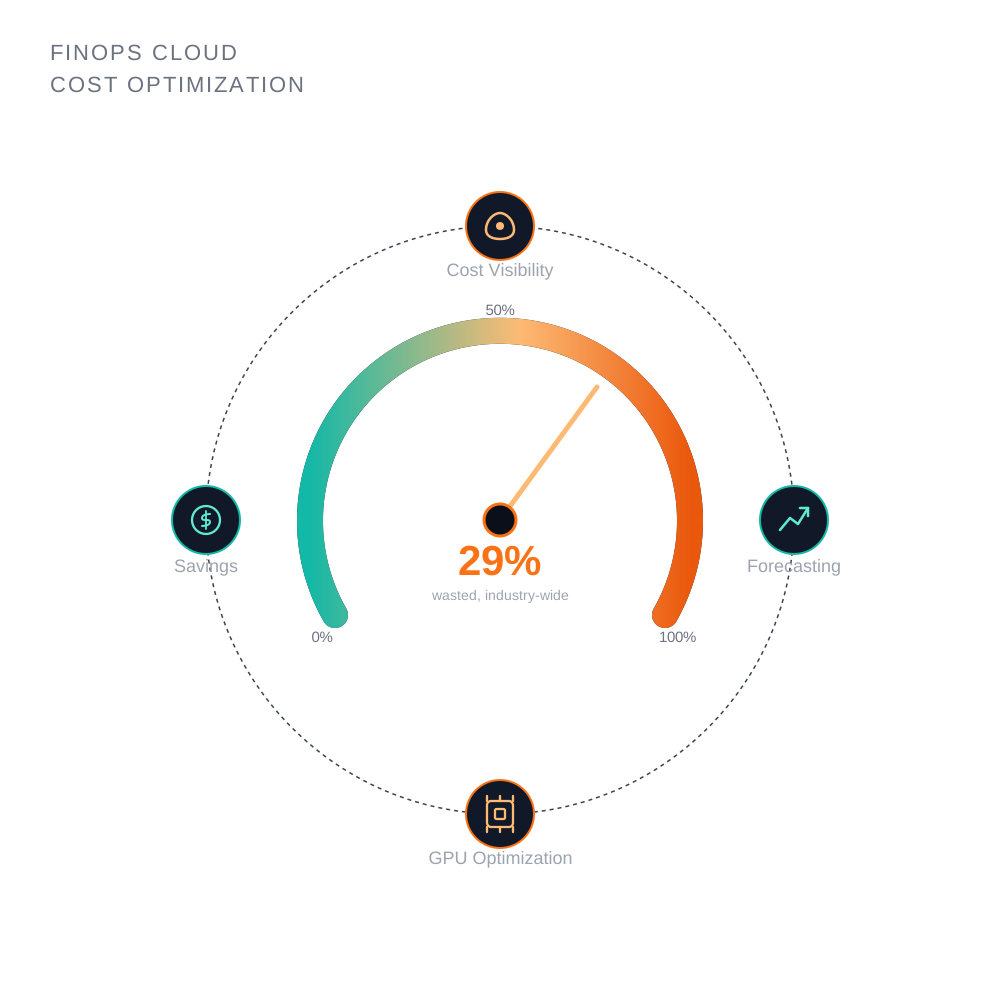
Cloud waste has reached 29%, a five-year high, driven by AI growth and increasingly complex infrastructure that makes forecasting more difficult.
Compliance-Grade

Compliance-Driven Cloud Optimization

The same practice that gets a client to a 7-month SOC 2 timeline applies here unified visibility, clear ownership, evidence you can show.
Built It Ourselves

We Built the Infrastructure Ourselves

For a lot of our clients, we built the infrastructure in the first place, so optimization happens with full context, not a generic checklist.
No Sales Estimate

A Real Number, Not a Sales Estimate

We’ll show you the actual number your infrastructure is wasting, not a generic promise that we’ll optimize your cloud and hope it sticks.
Accountability, Not Just Savings

Accountability Beyond Savings

One-time savings get eaten by new waste within a year without ongoing accountability we build the process, not just find the wins.

No flat number. A scoped proposal instead.

How it works

There’s no flat number that means much here a single-provider team with a few obvious waste categories needs a different engagement than a multi-cloud enterprise trying to get AI and GPU spend under control for the first time. We’ll start by looking at your actual billing data and current footprint, and come back with a scoped proposal so you know the real cost before committing.
How it works

There’s no flat number that means much here a single-provider team with a few obvious waste categories needs a different engagement than a multi-cloud enterprise trying to get AI and GPU spend under control for the first time. We’ll start by looking at your actual billing data and current footprint, and come back with a scoped proposal so you know the real cost before committing.

Numbers matter more than promises here.

7mo

Median time to SOC 2 Type II readiness, the same discipline behind accurate cost forecasting.

0

Critical findings across our last 11 external penetration tests, the same zero across every practice we run.

97%

Of cloud spend wasted industry-wide the highest that number’s been in five years, and still climbing.

What Our Clients Are Saying

Discover the experiences and feedback from Our Valued Clients.

Learn how We can help your industry

Schedule a meeting with us to find out how TRIOTECH SYSTEMS can help your industry.

favicon

Connect with Us

Fill in your details below and we'll get back to you!

Thank You

We have received your inquiry and will get back to you soon

Frequently Asked Questions

Everything you need to know about working with TRIOTECH SYSTEMS.

How much cloud waste is actually normal?

Organizations without a structured FinOps practice typically waste 32–40% of cloud spend; mature practices get that down to 15–20%. Industry-wide the average sits around 29% as of 2026 so if your number’s close to that, you’re not unusual, but there’s real room to improve.

Native tools are a good start for basic visibility, but they typically stop at single-provider reporting and don’t do predictive forecasting or cross-cloud optimization. If you’re on more than one provider, which is most enterprises now, native tools alone leave real gaps.

Visibility tools show you what you’re spending. They don’t reduce waste on their own that takes policy, ownership, and enforcement, which is the part most dashboards stop short of. Seeing the problem and fixing it are two different projects.

Yes AI workloads are usage-dependent and harder to forecast than traditional compute, and statically provisioned GPU capacity often runs at only 30–40% utilization. It’s become one of the fastest-growing waste categories precisely because it’s newer and less understood.

Update cookies preferences